
Social Posts
Escaping the Restricted Funding Trap: APT Surat’s Infrastructure Story
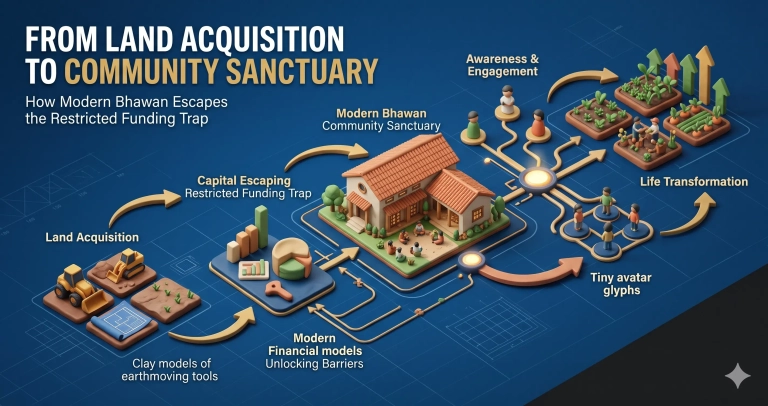
Most social sector initiatives get caught in a restricted funding trap. They spend years grant chasing, stuck in pilot purgatory and weighed down by funder compliance fatigue. The outcome? High administrative friction and short-lived programs.
When Agarwal Pragati Trust Surat was formed on January 1, 2012, we set out to build a model grounded in permanent resilience. We recognized that true community support requires reliable physical assets—not temporary fixes or impact vanity metrics.
Our strategic expansion—acquiring a 4,784 sq yard plot near the Airport at Dumas Village for the construction of Modern Bhawan—breaks the capacity building catch-22:
• Autonomous welfare capital eliminates constant survival-mode fundraising.
• Shared infrastructure protects teams against grassroots burn-out.
• Long-term physical assets anchor sustainable educational, medical, and financial support programs.
True transformation isn’t measured by short-term cohort sizes. It happens when you establish a permanent sanctuary that empowers families and local entrepreneurs for decades.
How is your leadership team building long-term institutional autonomy into your community projects?
Escaping the Funding Trap: The Modern Bhawan Story
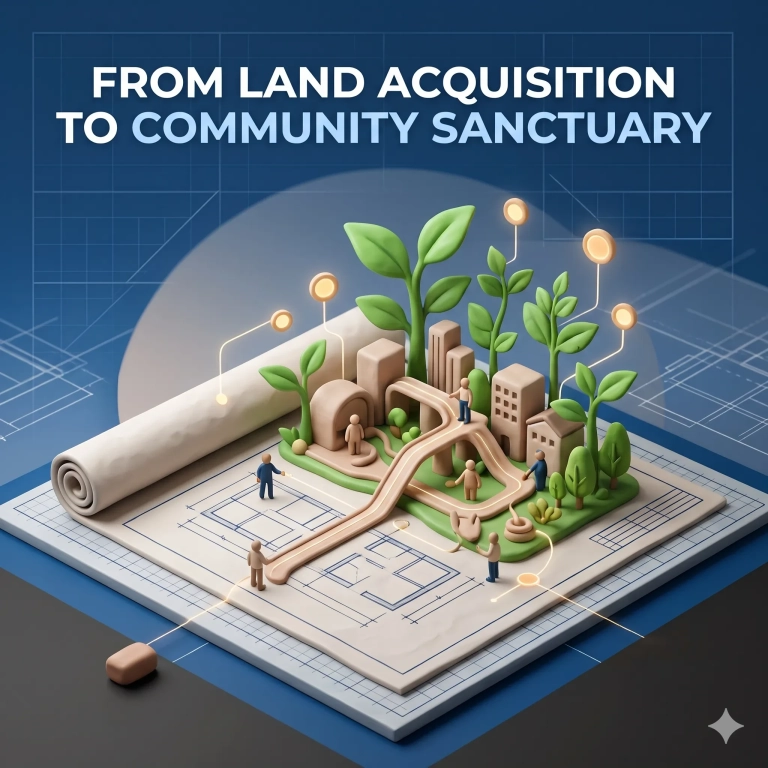
Most community initiatives stay stuck in a restricted funding trap, endlessly chasing short-term grants instead of building permanent assets. We saw grassroots burn-out taking over passionate leaders who were spent dealing with funder compliance fatigue rather than driving real, long-term impact.
That’s why Agarwal Pragati Trust Surat took a bold step forward. Formed on January 1, 2012, our trust chose autonomy over temporary fixes. We acquired a 4,784 sq yard plot near the Airport at Dumas Village to construct our Modern Bhawan. This landmark space isn’t just another building—it is a self-sustaining foundation for social, financial, and educational support.
By creating a permanent hub, we escape the capacity building catch-22. We build an environment where mentorship, business growth, and medical aid thrive without relying on volatile funding cycles. Sustainable welfare requires a permanent sanctuary, not endless grant chasing.
Want to be part of building lasting community welfare in Surat? Reach out to explore our ongoing initiatives or get involved today.
Escaping Pilot Purgatory: Growth Guide for Surat Founders
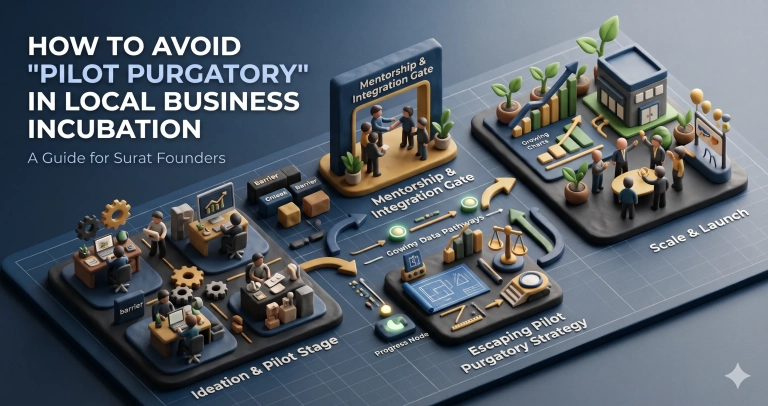
Most early-stage Surat founders don’t fail because of a bad product—they get stuck in pilot purgatory.
Running small tests forever without clear milestones creates severe cohort attrition and grassroots burn-out. To transition from endless trials into a sustainable enterprise, local entrepreneurs need structured guidance rather than isolated momentum.
Here are three practical ways to shield your startup from getting stalled:
1. Map Concrete Scale Metrics: Move beyond impact vanity metrics. Define exact operational goals required before launching any trial.
2. Secure Dedicated Mentorship: Pair with experienced domain leaders early. Real guidance prevents funder compliance fatigue and keeps your strategy aligned.
3. Tap Local Incubation Networks: Leverage shared workspaces and structured mentorship programs to build credibility and community backing.
Building a resilient venture takes collective support and clear vision. What is the biggest challenge your startup is navigating right now?