


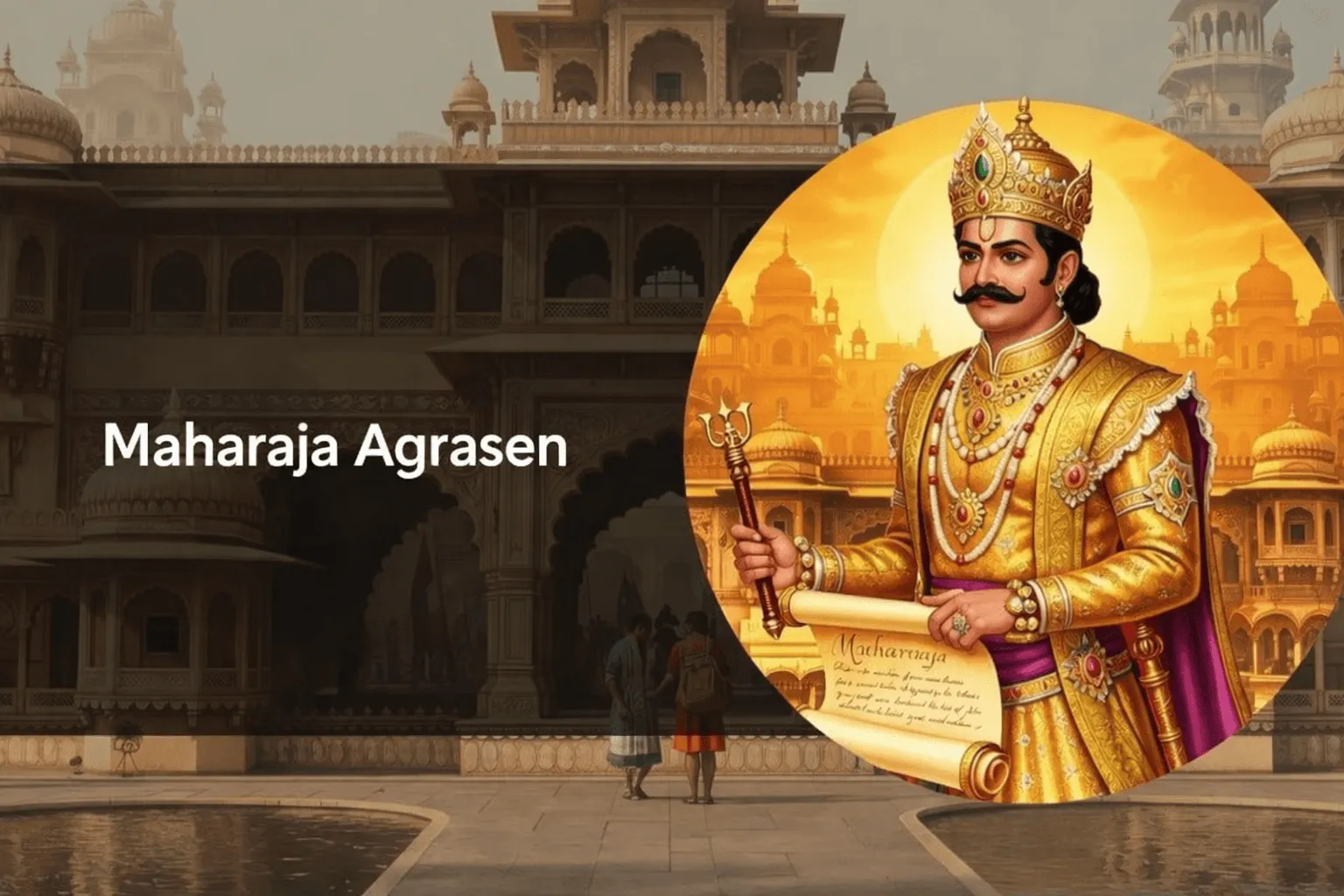
If you think the story of an ancient kingdom is just for temple brochures, you are missing the blueprint of your own business success. Understanding Agroha history Maharaja Agrasen is not about looking backward: it is about solving the modern problems of capital allocation, community trust, and business continuity in Surat. This heritage provides a practical blueprint for sustainable commerce, wealth distribution, and mutual aid that directly addresses the challenges faced by today’s urban professionals. For those of us navigating the competitive trade environments of South Gujarat, these historical principles are functional business tools. Our work at the Agrawal Pragati Trust is built on translating these ancient models of social welfare into practical, daily support for local families and entrepreneurs.
The Practical Economics of the One-Brick, One-Rupee Rule
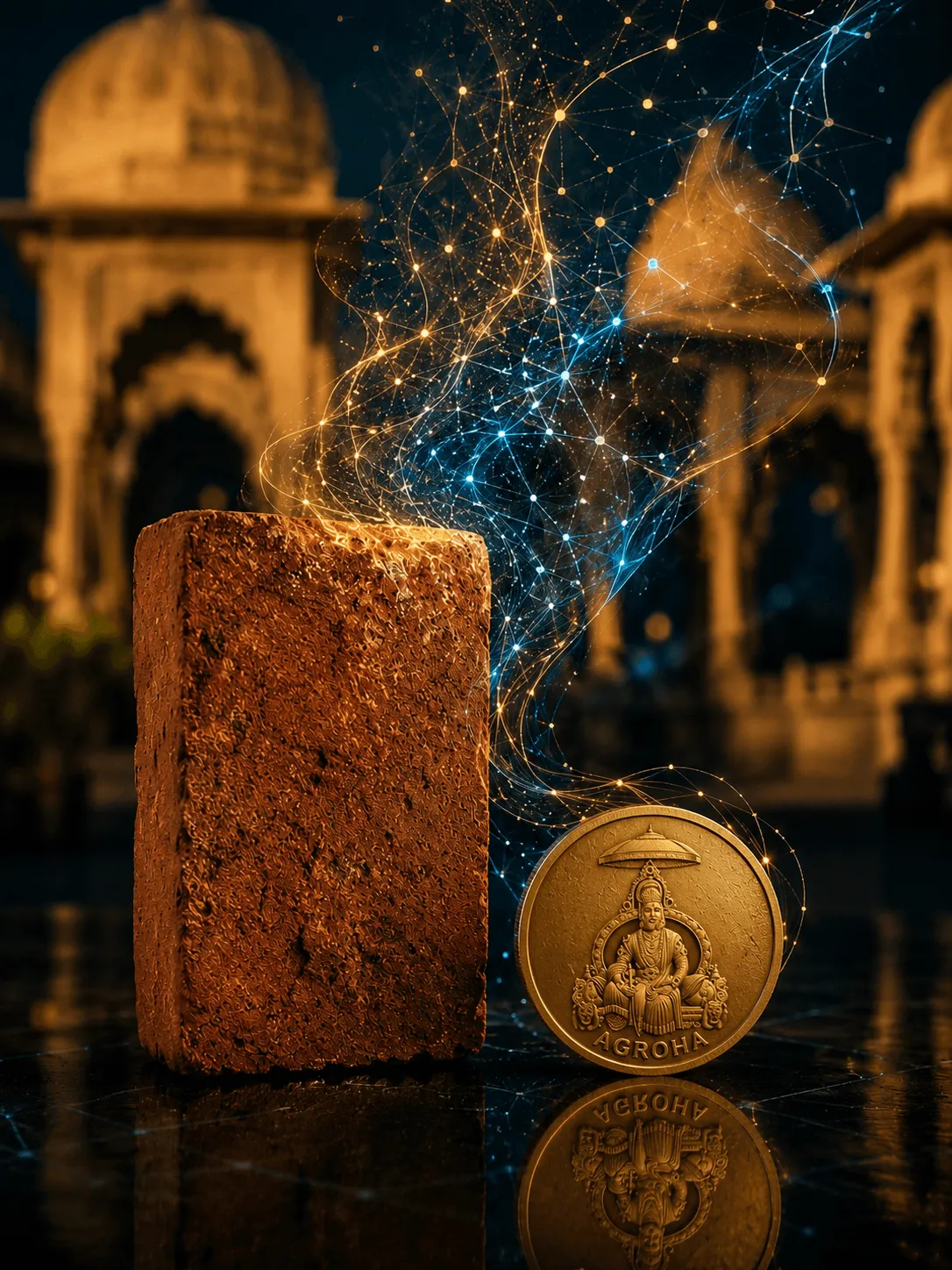
The concept of “Ek It, Ek Rupya” (one brick and one rupee) is often repeated in community speeches, yet its economic brilliance is rarely analyzed. When a new migrant family arrived in the ancient city of Agroha, every established household was required to give them exactly one brick and one copper coin. This was a highly structured system of capital formation. The bricks allowed the newcomer to construct a home immediately, securing their shelter. The coins provided the necessary working capital to start a trade or business. This simple rule prevented poverty from taking root in the kingdom.
This system succeeded because it bypassed the predatory interest rates of traditional moneylenders. It allowed the newcomer to enter the market as an equal partner rather than a debtor. In the modern markets of Surat, from the textile hubs of Ring Road to the diamond cutting units of Varachha, we see the modern equivalent of this system. When we offer interest-free business loans, provide subsidized education, or offer spaces for networking, we are not handing out charity. We are investing in the expansion of our economic ecosystem. It keeps the community self-reliant and prevents the concentration of wealth in too few hands.
Is this ancient system still viable in a modern economy?
The short answer is yes, but the execution must adapt. We cannot hand out physical bricks in Surat’s high-rise commercial developments. Instead, we translate this principle into cooperative credit societies, business incubation programs, and shared workspaces. It is about reducing the barrier to entry for the next generation of founders. By providing seed funding and mentorship to young professionals, we ensure that the spirit of mutual aid remains a functional economic reality rather than a sentimental memory.
Connecting Modern Surat Businesses to Agroha history Maharaja Agrasen
Connecting modern Surat businesses to Agroha history Maharaja Agrasen requires a shift in how we view corporate responsibility. The historical transition of our ancestors from the Kshatriya warrior class to the Vaishya trading class was a deliberate social realignment. It established commerce as a path of service rather than mere accumulation. This historical shift is visible in the archaeological remains at the Agroha mound in Haryana, which date back to the third century BC. The excavations revealed a sophisticated urban layout, advanced metalworking, and coins that bear the name of the republic. This was not a primitive settlement: it was a highly organized trade hub built on systemic fairness.
For a business owner in Surat, this history is proof that ethical commerce is not a modern luxury. It is our founding code. When we negotiate supplier terms, manage labor, or structure partnerships, the principles of fairness established by our ancestors guide our decisions. It keeps our family businesses resilient across generations because trust is the ultimate currency in trade. Through our community initiatives, we work to keep these ethical standards alive by supporting young professionals who want to build businesses with high integrity.
Can you maintain business growth without compromising ethics?
Many believe that aggressive growth requires cutting corners. The historical model of Agroha argues the opposite. The eighteen gotras established by the king were named after rishis, linking trade directly to ethical responsibility. This structure prevented monopolies and encouraged cooperative competition. In Surat’s highly competitive markets, keeping your word is what ensures long-term survival. Ethics is the ultimate risk-mitigation tool. When a merchant is known for absolute honesty, they attract the best partners and the most loyal clients.
The eighteen gotras linked trade directly to ethical responsibility, preventing monopolies and encouraging cooperative competition in business.
Democratic Governance and the Eighteen Gotras
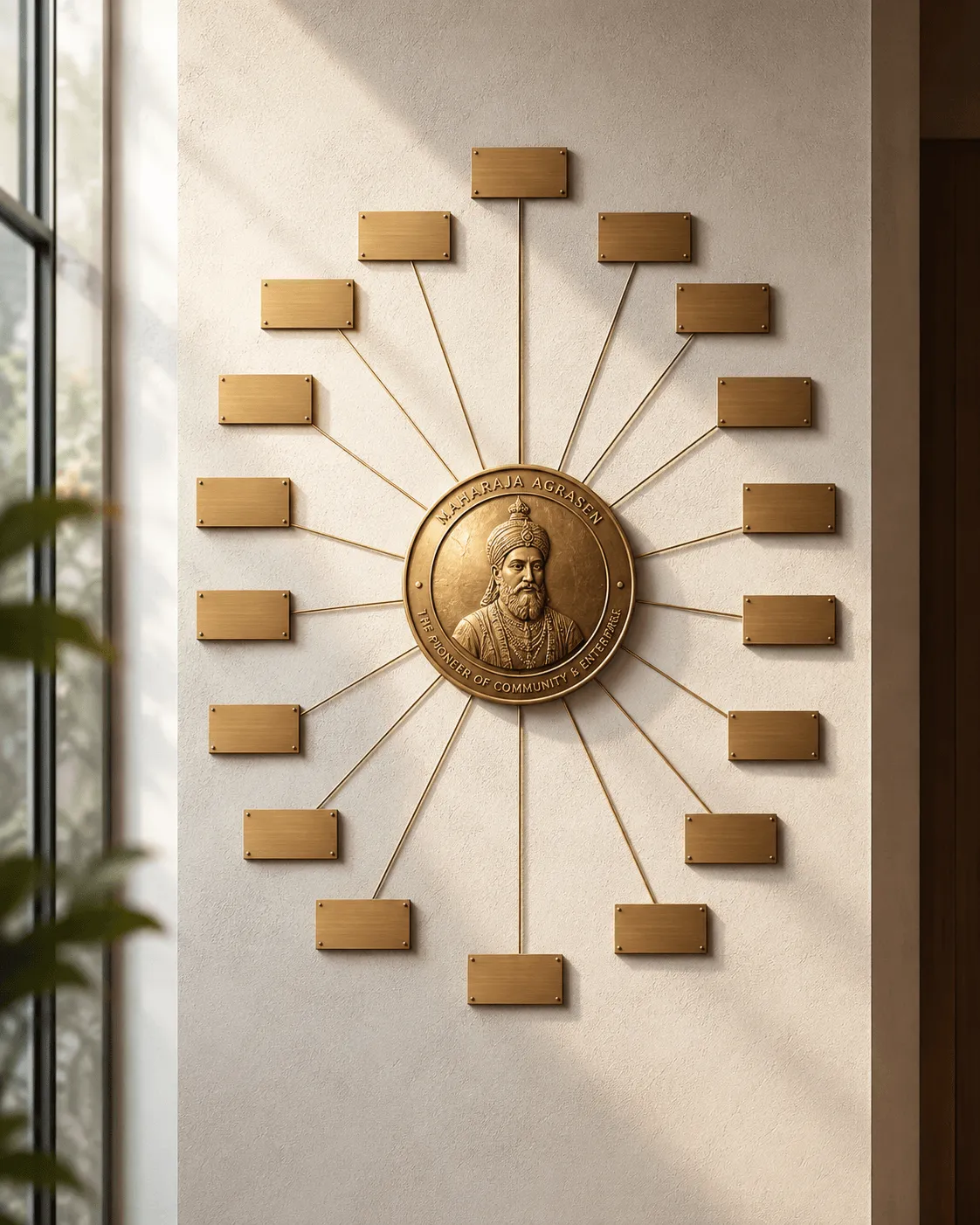
The division of the community into eighteen clans was not a tool for social division. It was a democratic federation. Each gotra leader had a seat at the state council, ensuring that no single group could dominate the decision-making process. This decentralized power structure was highly advanced for its time. It allowed the kingdom to remain stable and prosperous even during periods of external pressure. It proved that a society built on consensus is far more resilient than one built on autocratic rule.
Our work at the trust reflects this democratic approach. Whether we are organizing medical camps, setting up educational funds, or managing community halls, we rely on collective consensus. No single person dictates the direction: we work as a collaborative body. This prevents the stagnation that often destroys old-school community groups and ensures that we remain responsive to the needs of our members. By keeping our decision-making processes transparent, we maintain the trust of the families we serve.
Why should young Agrawals care about these clans?
It is easy for the younger generation to dismiss gotras as outdated matrimonial categories. But their true value lies in professional networking and social safety nets. When you meet an Agrawal from another part of the country, that shared lineage acts as an immediate trust accelerator. It bypasses weeks of formal vetting. In a world where trust is increasingly scarce, this is a massive competitive advantage. It opens doors to new markets, partnerships, and mentorship opportunities that would otherwise take years to build. We maintain a detailed membership directory to help local professionals connect and build these vital relationships.
The Agrawal Path to Modern Philanthropy
Philanthropy in our community is not about writing a check at the end of the financial year to reduce taxes. It is a fundamental responsibility. The ancient texts describe how the citizens of Agroha viewed wealth: it was a resource held in trust for the welfare of the entire society. This perspective shifts how we approach charity. It moves us away from patronizing handouts toward systemic enablement. We do not just help people survive: we help them thrive.
When we fund schools, build hospitals, or provide food security, we are not doing a favor to the recipients. We are restoring balance to our social ecosystem. This model of community-funded welfare ensures that even the most vulnerable members have a safety net. In Surat, where rapid industrialization can leave families behind, our welfare programs act as a bridge, helping them regain their financial independence. This is the true legacy of our history: a society where no one is left to struggle alone.
“Wealth is not a personal possession but a social trust. When we lift others, we secure our own future.”
By understanding the deep connections between Agroha history Maharaja Agrasen and our daily lives, we find the tools to build a stronger, more cooperative community right here in Surat. Let us put these principles into action. Join us in building a modern supportive network that honors our past while securing our future. Explore our welfare programs and become an active participant in our collective growth.
Frequently asked questions
Who was Maharaja Agrasen?
He was a legendary king of the Solar Dynasty who ruled over the kingdom of Agroha. He is celebrated for establishing democratic governance, promoting non-violence, and shifting his community from warrior roots to ethical commerce and trade.
What is the significance of Agroha Dham?
Agroha Dham is the historical and spiritual home of the Agrawal community. Located in Haryana, it marks the ancient capital where our cultural values, business ethics, and social welfare models were first established.
How does the one-brick and one-rupee rule apply today?
While we no longer hand out physical bricks, we apply this principle through modern community support systems. This includes business mentorship, interest-free loans, educational scholarships, and professional networking platforms.
Why did the community adopt the Vaishya path?
The transition was made to promote peace, economic self-reliance, and social welfare. By choosing commerce over warfare, the community established trade as a path of service and mutual prosperity.
How can Surat residents get involved in these heritage programs?
You can join the Agrawal Pragati Trust to participate in our social welfare initiatives, attend networking events, and contribute to our educational and medical support programs designed for local families.